
When a defect helps cause a crash, a fire, or worse injuries during a collision, the case may go far beyond ordinary driver negligence. In Chicago, that can lead to a manufacturing defect claim against the companies responsible for putting an unsafe vehicle on the road.
Kia Vehicle Safety Recalls and Manufacturing Defects
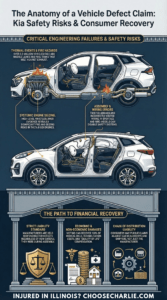
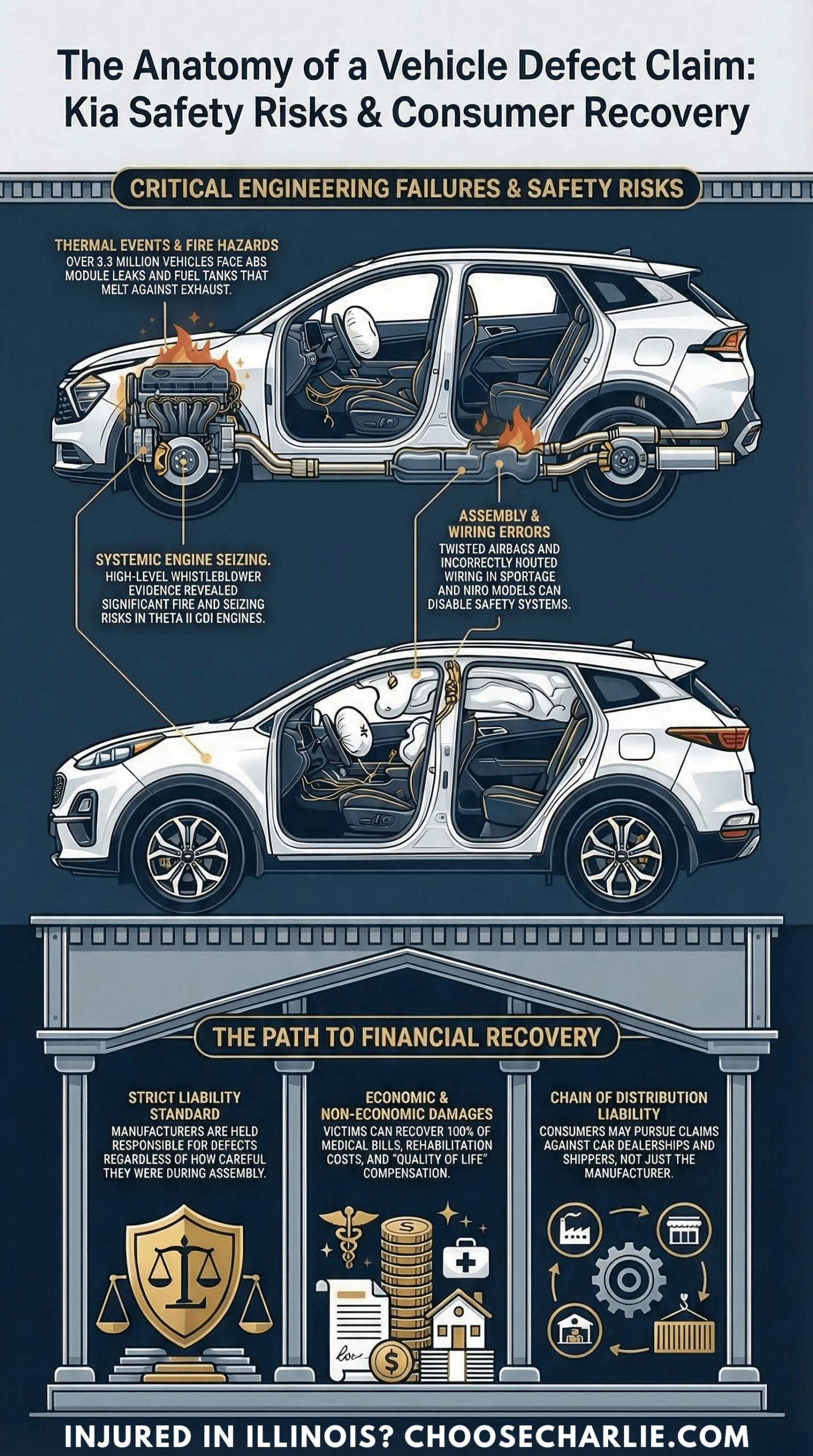
Over the last several years, Kia-related safety issues have included fire-risk defects tied to ABS and HECU systems affecting 3.3 million Kia and Hyundai vehicles, a Kia K5 fuel tank defect affecting more than 250,000 vehicles, wiring defects in more than 80,000 Kia Niro models, and side curtain airbag assembly defects in nearly 77,000 Kia Sportage SUVs.
Kia vehicle safety recalls have put a spotlight on a hard truth many drivers never see coming: sometimes the danger starts inside the vehicle itself.

Kia Recalls Can Signal A Much Bigger Safety Problem
A vehicle recall notice can look simple on paper. Bring the vehicle in. Get the repair. Move on.
Real life is rarely that clean.
Many car recalls begin with a dangerous part, a failed assembly process, or a hidden system flaw that puts drivers and passengers at risk. In Kia cases, that has meant fire hazards, fuel system failures, engine seizure concerns, and airbags that may not work the way they should in a crash.
These vehicle defects can change the legal focus of a car accident. The case is no longer just about what another driver did. It may also center on whether the vehicle itself caused the wreck, fed the fire, failed to protect the occupant, or turned a survivable crash into a catastrophic injury event.

Kia Vehicle Fire Risks Linked To ABS And HECU Defects
One of the largest Kia-related safety issues involved faulty anti-lock brake system modules and hydraulic electronic control units. Internal brake fluid leaks could trigger an electrical short and create a fire risk. Drivers were warned that affected vehicles could catch fire while driving or even while parked and turned off.
That is not a minor repair issue.
A vehicle is supposed to carry a family safely down the road. It is not supposed to become a fire hazard in a garage, driveway, or parking lot. When a Chicago driver is hurt in a fire-related vehicle event, a manufacturing defect claim may focus on whether the unsafe condition existed before the vehicle ever reached the owner.
In many product liability cases, strict liability becomes a powerful legal tool. That means the focus can stay on whether the product was defective and whether that defect caused the injury, not just on whether the manufacturer acted carelessly in the everyday sense.

The Kia K5 Recall: Fuel Tank Defect
The Kia K5 recall issue involved a deteriorating purge control check valve that could allow pressure to build inside the fuel tank. That pressure could force the plastic fuel tank to expand until it touches hot exhaust components, creating a serious thermal risk.
Drivers were told to watch for warning signs such as popping sounds near the fuel tank, a check engine light, and rough or unstable idling.
Those details can become powerful evidence after a crash or vehicle fire.
If a driver noticed these symptoms before a collision, smoke event, or fire, that history can help connect the defect to the harm. Service records, dealership visits, repair notes, inspection findings, and vehicle data may all help show that the failure was not random bad luck. It was part of a dangerous product problem.
Engine Seizure And Whistleblower Allegations
Kia’s defect history also includes engine seizure and fire concerns tied to Theta II GDI engines. In 2021, the National Highway Traffic Safety Administration issued a $24 million whistleblower award to Kim Gwang-ho, a longtime engineer whose information was tied to those safety concerns.
That kind of history can shape the entire tone of a manufacturing defect case.
Product liability claims are often built on more than one broken part. They may involve complaint patterns, earlier reports, internal company knowledge, and warning signs that the danger had already shown up in real vehicles. When a Chicago car crash involves engine seizure, sudden loss of power, or a fire event, that background can become a major part of the investigation.
Niro Wiring Defects And Sportage Airbag Defects
Some of the most alarming recall issues involve the very systems meant to protect people in a crash.
More than 80,000 Kia Niro models were recalled because incorrectly routed floor wiring could be damaged by repeated seat movement. That kind of damage could disable airbags or trigger unintended deployment.
Nearly 77,000 Kia Sportage SUVs were also recalled after side curtain airbags were reportedly installed with a twist that could stop them from deploying properly during a side-impact collision.
A crash can change in an instant when a safety system fails.
If an airbag does not deploy, deploys the wrong way, or fails because of a wiring or assembly defect, the injuries may be far worse than they should have been. In that kind of case, the legal claim may involve both the collision itself and the vehicle’s failure to protect the occupant.
Kia Recalls: Manufacturing Defects Snapshot
| Issue | Vehicles Affected | Reported Defect | Potential Claim Issues |
| ABS / HECU Fire Risk | 3.3 million Kia and Hyundai vehicles | Brake fluid leak can trigger electrical short and fire | Burn injuries, property damage, fire loss, smoke exposure |
| Kia K5 Fuel Tank Defect | 250,000 plus K5 vehicles, 2021 to 2024 | Pressure buildup can expand tank into hot exhaust components | Fire claims, fuel leak claims, crash-related injuries |
| Kia Niro Wiring Defect | 80,000 plus Niro models, 2023 to 2025 | Incorrect wiring routing may damage harness and affect airbags | Airbag failure, unintended deployment, enhanced injury claims |
| Kia Sportage Airbag Defect | Nearly 77,000 Sportage SUVs | Twisted side curtain airbag may not deploy properly | Side-impact injury claims, occupant protection failure |
| Theta II Engine Concerns | Multiple affected vehicles | Engine seizure and fire risk concerns | Sudden loss of control, fire claims, prior notice issues |
Damages Available In a Vehicle Manufacturing Defect Claim
A vehicle manufacturing defect claim is about more than fixing a car. It is about the full human cost of the defect.
That can include:
- Medical bills,
- Lost wages,
- Future medical care,
- Rehabilitation,
- Physical therapy, and
- Reduced earning capacity.
In serious cases, it can also include:
- The cost of long-term care,
- Disability-related support, and
- Job retraining.
The claim may also include non-economic damages. These losses are just as real, even though they do not come with receipts. These can also become part of the case:
- Pain and suffering,
- Emotional distress,
- Trauma,
- Fear of driving,
- Sleep disruption, and
- Loss of normal daily life.
When the injuries are permanent, the claim must also account for the future. A fast settlement may look tempting when bills start stacking up, but serious defect cases often involve needs that stretch far beyond the first hospital visit.
In fatal accident cases, surviving family members may also have the right to pursue wrongful death damages tied to the loss of support, companionship, and guidance left behind after a deadly defect event.
Who May Be Held Responsible for Vehicle Defects?
A manufacturing defect case may involve more than the automaker alone.
Responsibility can reach through the chain of distribution. That may include the manufacturer, the dealership that sold the vehicle or defective part, and other companies involved in placing the dangerous product into the stream of commerce.
That broader reach matters in a serious personal injury case. It can open multiple paths to financial recovery and place legal pressure on every company that played a role in putting the unsafe vehicle on the road.
The Vehicle Itself Can Become Critical Evidence
Manufacturing defect cases rise or fall on proof.
The legal claim must show that the defect was not just present. It must show that the defect actually caused the crash or worsened the injuries. That means the vehicle itself often becomes one of the most important pieces of evidence in the case.
Photos, warning lights, service records, recall notices, dealership communications, black box data, inspection reports, damaged parts, and expert analysis can all help tell the story. Once the vehicle is repaired, sold, altered, or scrapped, some of that proof may be gone for good.
Steps To Take After A Suspected Kia Defect Crash
- Get medical care right away.
- Protect the vehicle if possible. Do not let it be repaired, sold, or destroyed before it can be inspected.
- Save recall notices, repair invoices, tow records, dealer emails, photos of warning lights, smoke, leaks, fire damage, and any airbag problems.
- Write down anything unusual you noticed before the crash, including stalling, rough idling, popping sounds, check engine warnings, electrical issues, or signs of fuel trouble.
- Then speak with our Chicago manufacturing defect car accident lawyers as soon as possible. In product liability cases, key evidence can disappear fast.
FAQs About Kia Recall Claims In Illinois
Can I Bring A Claim If My Kia Was Never Officially Recalled?
Yes. A vehicle recall can help support a claim, but a formal recall is not always required. If the vehicle had a defect and that defect caused harm, a claim may still exist.
Is A Car Recall Enough To Win My Case?
No. A car recall can be strong evidence, but the case still has to connect the defect to the crash, fire, or injuries.
What If My Kia Caught Fire While Parked?
You may still have a claim. Some Kia-related fire defects involved vehicles that could catch fire while parked and turned off, not just while driving.
What If My Airbag Did Not Deploy?
That can be a major issue in a manufacturing defect case, especially when the recall history includes airbag assembly problems or wiring defects that can affect airbag performance.
Can I Recover Money For Pain And Suffering?
Yes. A manufacturing defect claim may include non-economic damages such as pain and suffering, emotional distress, and reduced quality of life.
Who Can Be Sued In A Kia Manufacturing Defect Case?
Possible defendants may include the manufacturer, the dealership, and other companies involved in the distribution chain, depending on the facts.
What If The Insurance Company Offers A Fast Settlement?
Be careful. Quick offers from the insurance company often focus on immediate bills and may leave out future treatment, long-term disability, ongoing therapy, and other lasting losses.
Can A Family File A Wrongful Death Claim After A Fatal Kia Defect Crash?
Yes. If a defect caused a fatal crash or fatal fire event, surviving family members may have the right to pursue wrongful death damages.
What Is The Biggest Mistake After A Suspected Defect Crash?
Allowing the vehicle to be repaired, altered, or scrapped before it is inspected for manufacturing defects is the biggest mistake you can make in this type of case. In many defect cases, the car itself is one of the strongest pieces of evidence.
Get a Free Case Evaluation with Our Chicago Manufacturer Defect Lawyers
If you or a loved one has been injured by a vehicle manufacturing defect contact us for a no-obligation case review.